
 KO
KO


- The 2026 fashion market outlook is presented through six key themes under “WILLOW,” a concept inspired by the flexibility and resilience of the willow tree
- Key outlook themes include the growing influence of small brands, AI-driven innovation, and the evolution of office wear
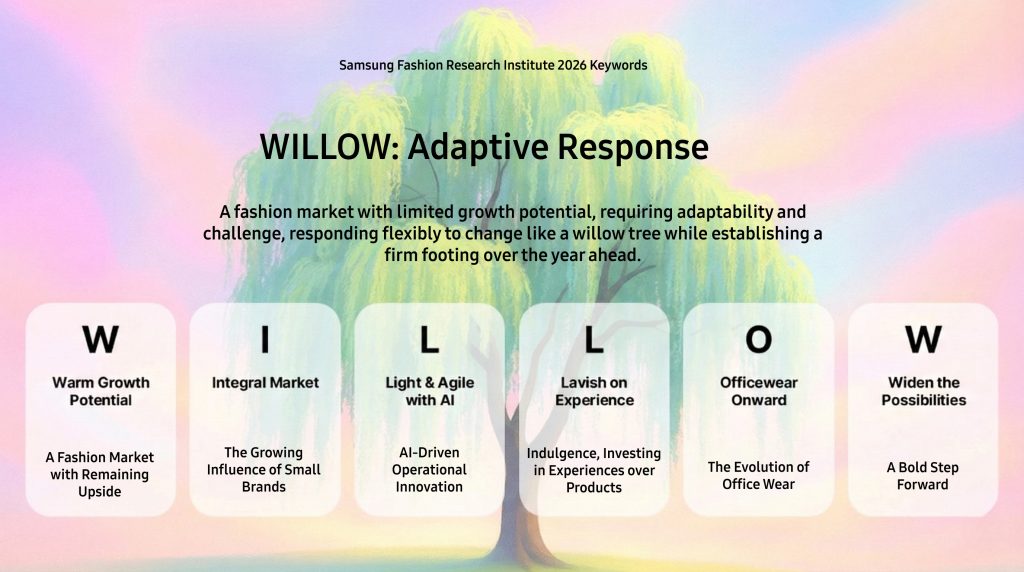
A Flexible Framework for a Challenging Market Environment
Samsung Fashion Research Institute has unveiled its outlook for the 2026 fashion market, presenting six key themes under the concept “WILLOW.”
Operated by Samsung C&T’s Fashion Group, the Institute announced the outlook on the 24th, emphasizing flexibility and adaptability as essential capabilities for navigating the evolving fashion landscape.
The term “WILLOW,” inspired by the willow tree, reflects the ability to respond flexibly to unexpected conditions while maintaining resilience. Drawing on the image of a willow that bends without breaking under pressure, Samsung Fashion Research Institute identified adaptability as a defining characteristic for fashion brands and businesses facing an increasingly complex operating environment in 2026.
WILLOW: Six Key Themes Shaping the 2026 Fashion Market
The 2026 fashion market outlook is structured around six interconnected themes, each represented by a letter in WILLOW, highlighting changes across markets, brands, operations, consumers, styles, and business strategy.
| W | I | L | L | O | W |
| Warm Growth Potential | Integral Market | Light & Agile with AI | Lavish on Experience | Officewear Onward | Widen the Possibilities |
(W)arm Growth Potential: A Fashion Market with Remaining Upside
Despite ongoing consumer caution driven by high inflation and economic uncertainty, Samsung Fashion Research Institute expects the fashion market to retain modest growth potential in 2026.
While consumer spending priorities have increasingly shifted toward experience-driven categories such as travel and leisure, research indicates that fashion demand has not fully contracted. According to recent surveys conducted by Samsung Fashion Research Institute, interest in fashion among consumers in their 20s has continued to rise regardless of gender. In addition, improving consumer sentiment and the impact of consumption stimulus measures from the second half of 2025 are expected to contribute to a gradual recovery in domestic demand.
With multiple economic forecasting institutions projecting South Korea’s economic growth rate to reach the high 1 percent range in 2026, supported by semiconductor industry recovery and improving domestic consumption, Samsung Fashion Research Institute anticipates the fashion market could achieve growth in the low 2 percent range.
(I)ntegral Market: The Growing Influence of Small Brands
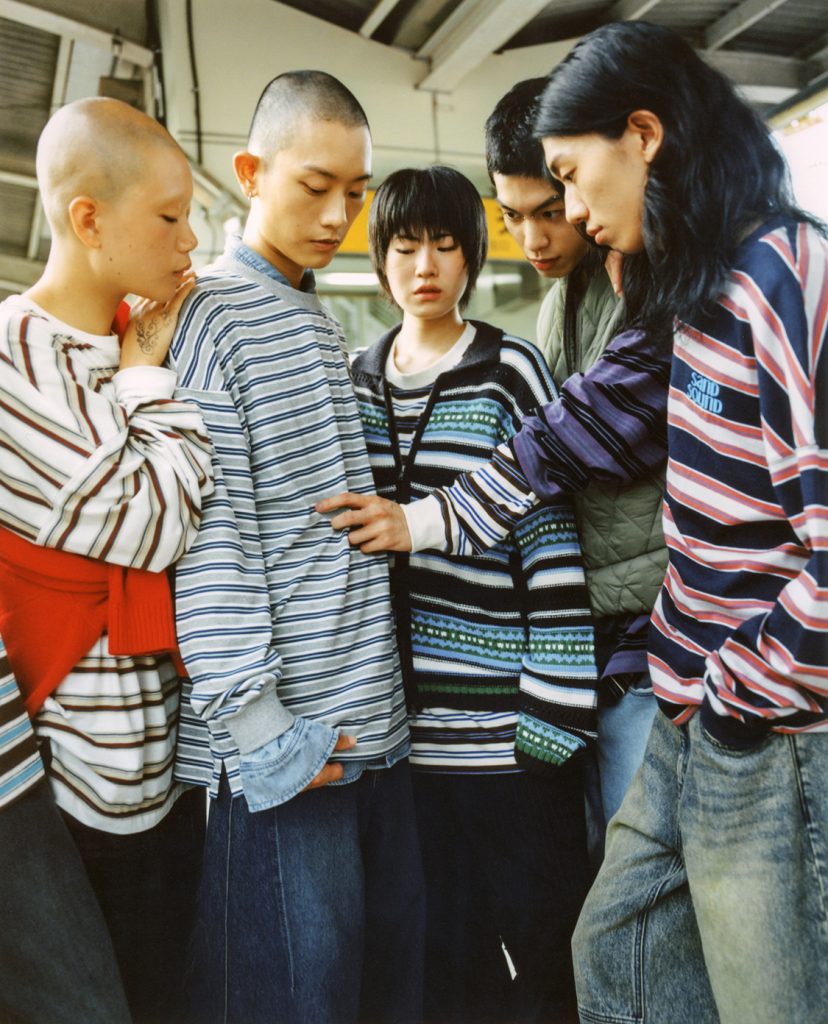
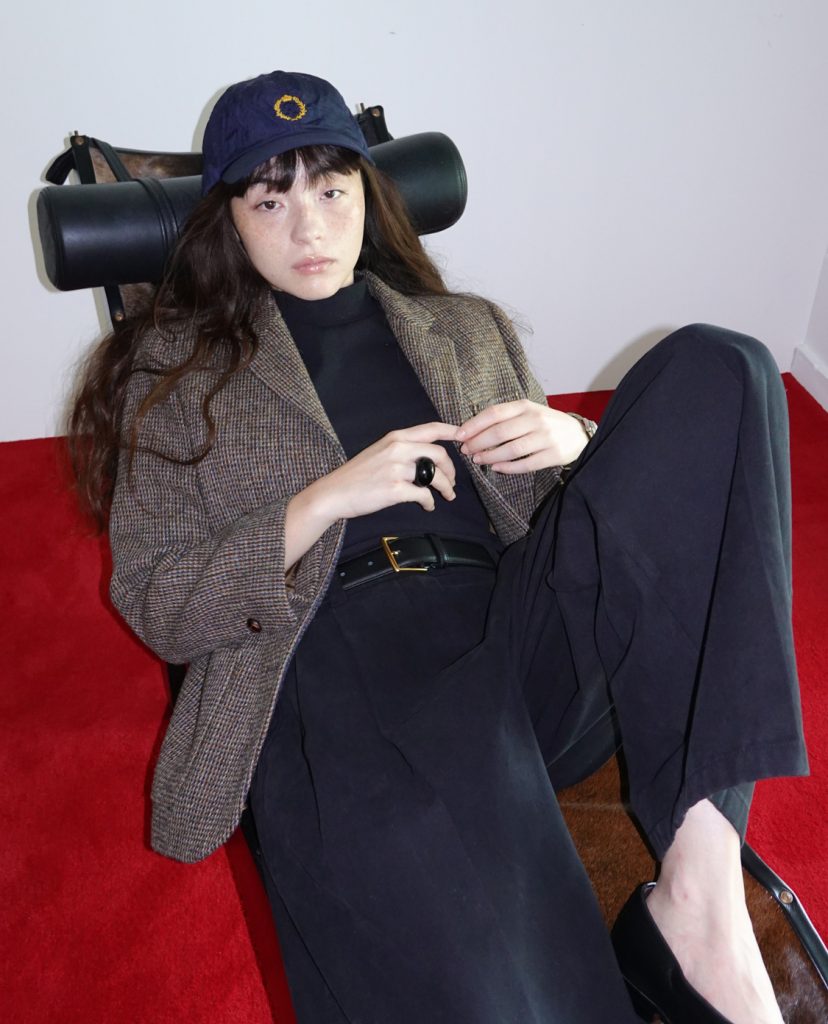
In 2026, smaller brands are expected to play a more prominent role in driving overall market growth.
Unlike the past, when brand logos often served as primary markers of consumer identity, consumers today increasingly favor brands that reflect personal taste, values, and lifestyle. As a result, brands with clear positioning and distinctive storytelling are gaining traction regardless of scale.
Samsung C&T’s Fashion Group has responded to this shift by expanding its portfolio of emerging brands, including SAND SOUND, The Aperture, and anggae. Now in their second to third year since launch, these brands have demonstrated strong growth, particularly through online channels.
At the same time, the growing adoption of AI-powered platforms that offer personalized product recommendations is lowering barriers for consumers to discover and purchase niche brands aligned with individual preferences. This trend is expected to further support the expansion of small and mid-sized brands within the fashion ecosystem.
(L)ight and Agile with AI: AI-Driven Operational Innovation
If 2025 marked the year when generative AI began to be applied in earnest across the fashion industry, Samsung Fashion Research Institute forecasts that 2026 will be the year when AI usage becomes embedded in daily operations.
In 2025, an increasing number of fashion companies leveraged generative AI to improve operational efficiency, reduce costs, and streamline image and video content production. This trend is expected to accelerate further in 2026.
AI is also reshaping the consumer shopping journey. As AI-driven recommendation systems become more sophisticated, the traditional search-select-purchase model is giving way to discovery-led commerce, in which consumers encounter products through AI recommendations, social media, and short-form content.
As this discovery-based shopping experience matures, consumers are expected to delegate more decision-making to AI systems that can anticipate preferences increasing accuracy , helping to reduce shopping fatigue. This shift is expected to have particularly strong implications for fashion, beauty, and lifestyle categories.
(L)avish on Experience: Indulgence, Investing in Experiences over Products
In an era where AI can generate a wide range of content and products, demand for authenticity, human connection, and tangible experiences is rising.
Samsung Fashion Research Institute expects that while consumers will continue to coexist comfortably with AI, the perceived value of physical spaces and real-world experiences will increase in 2026. Recent surveys show that consumers express the strongest interest in experience-oriented categories such as hobbies, leisure activities, and travel.
Supporting this trend, external analysis by NH NongHyup Bank indicates that consumers in their 20s and 30s have reduced spending on department store shopping while increasing expenditure on experiential activities, including sports venues, concerts, musicals, swimming pools, and ski resorts.
In response, retailers and fashion brands are increasingly incorporating experiential elements into their strategies, ranging from curated travel programs to immersive dining experiences. Samsung Fashion Research Institute expects this focus on experiential consumption to intensify further in 2026.
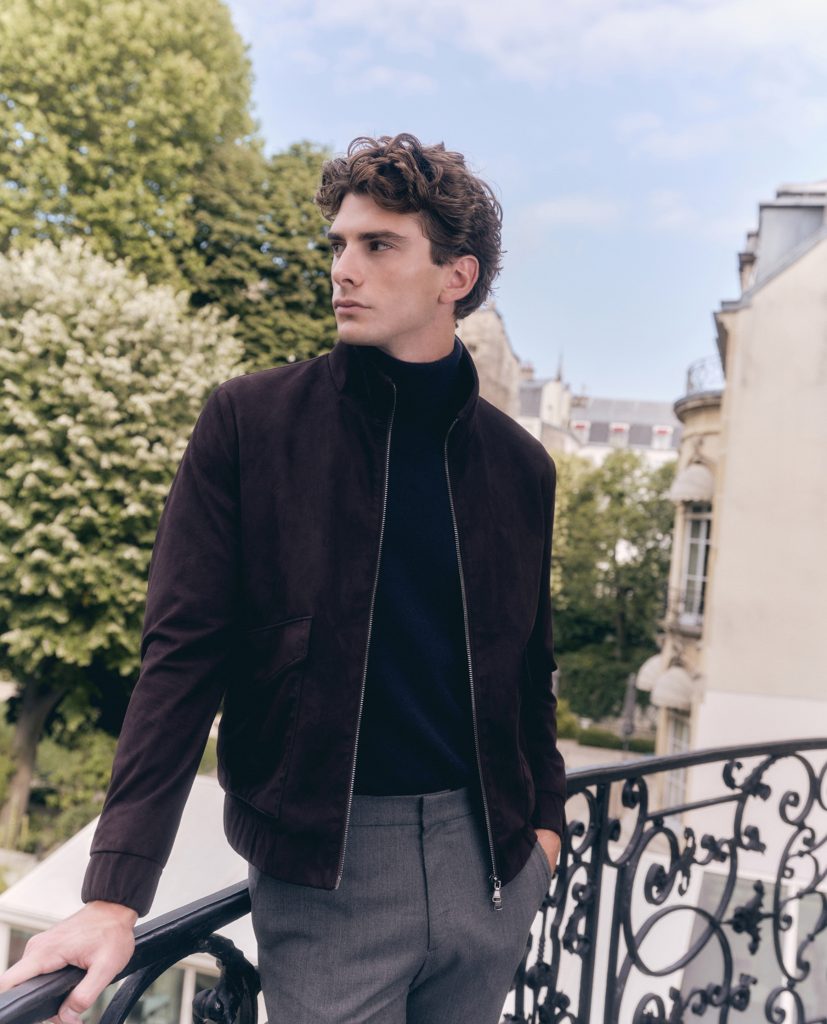
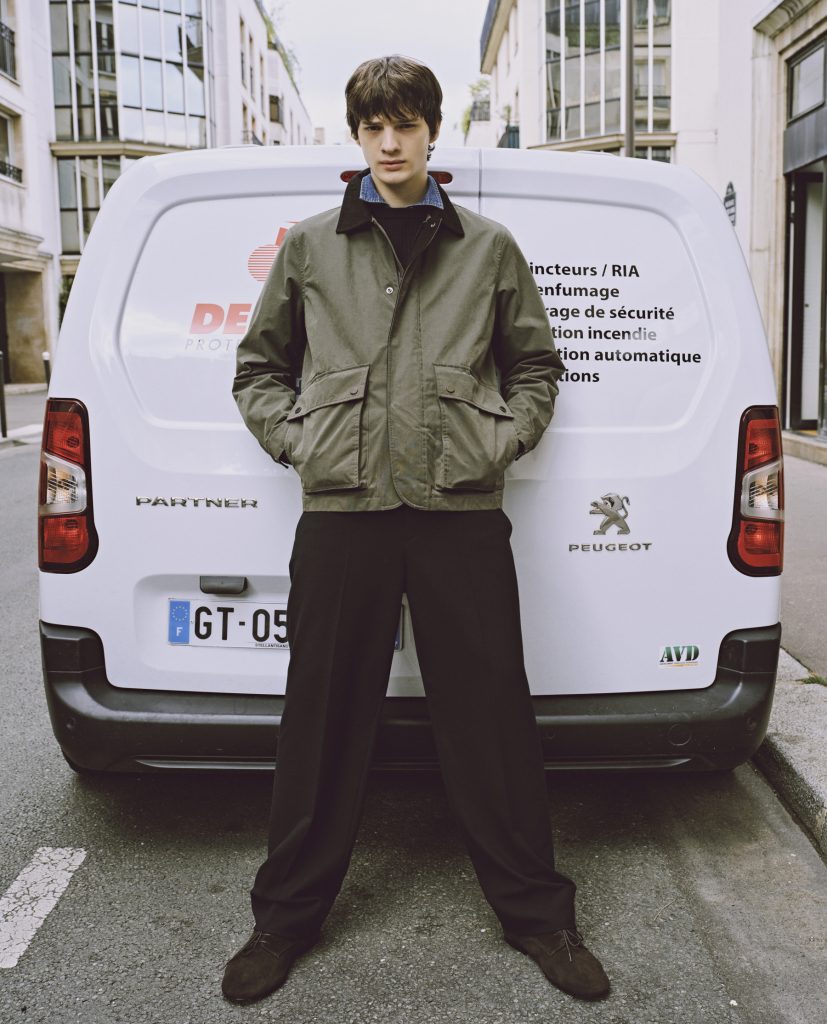
(O)ffice Wear Onward: The Evolution of Office Wear
Office wear is expected to undergo a notable transformation in 2026 as work environments continue to diversify.
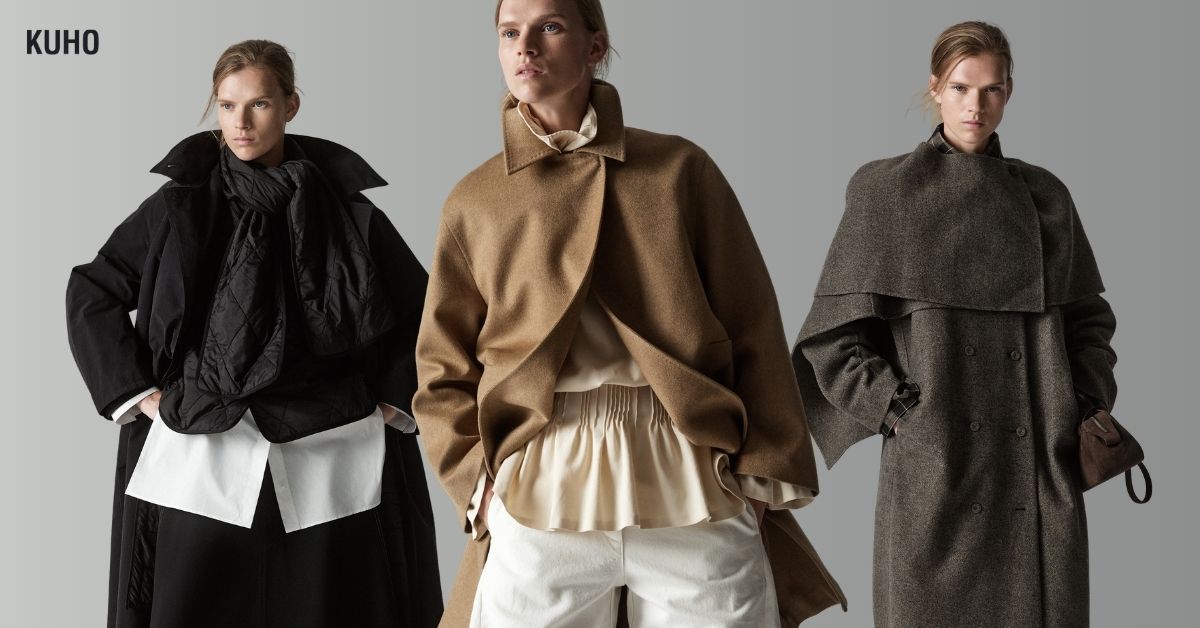
Traditionally one of the most conservative categories in fashion, office wear is being reinterpreted to reflect greater individuality, functionality, and flexibility. The rise of minimalism and essential wardrobes is driving styles that blend daywear, leisurewear, and classic tailoring, allowing garments to transition seamlessly between professional and casual settings.
Enhanced detailing in classic office wear designs is also expected to enable broader usage, from the workplace to leisure time. Leading Korean menswear brands such as GALAXY and Rogatis are anticipated to showcase these evolving trends.
In addition, functional materials designed to adapt to changing climates, along with adjustable silhouettes and smart design features, are expected to gain importance as environmental conditions increasingly influence fashion choices.
(W)iden the Possibilities: A Bold Step Forward
As uncertainty becomes the new normal, Samsung Fashion Research Institute highlights the importance of bold yet agile strategic decision-making.
According to The State of Fashion 2026, a recent report by Business of Fashion (BoF) and McKinsey, industry leaders describe the current market environment as one of constant challenges , emphasizing the need to translate uncertainty into concrete strategic responses. The report identifies agility and rapid adaptation as decisive factors for success in 2026, noting that brands willing to move beyond established practices and respond flexibly to change are more likely to endure ongoing volatility.
Samsung Fashion Research Institute concludes that while the fashion market is expected to remain challenging, brands and companies that respond flexibly to change—like a willow bending in the wind—will be better positioned to navigate uncertainty and identify opportunities for sustainable growth.