
 KO
KO


- UAE HVDC project records 30 million work hours without a lost-time injury across four geographically separated onshore and offshore sites
- Achievement reflects safety-focused design, project-wide risk assessment, bottom-up communication and an established stop-work culture
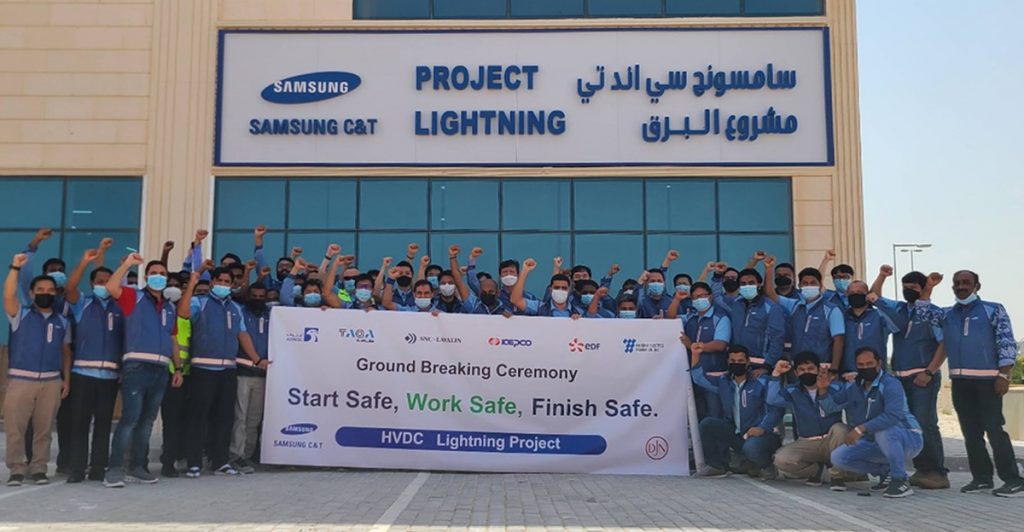
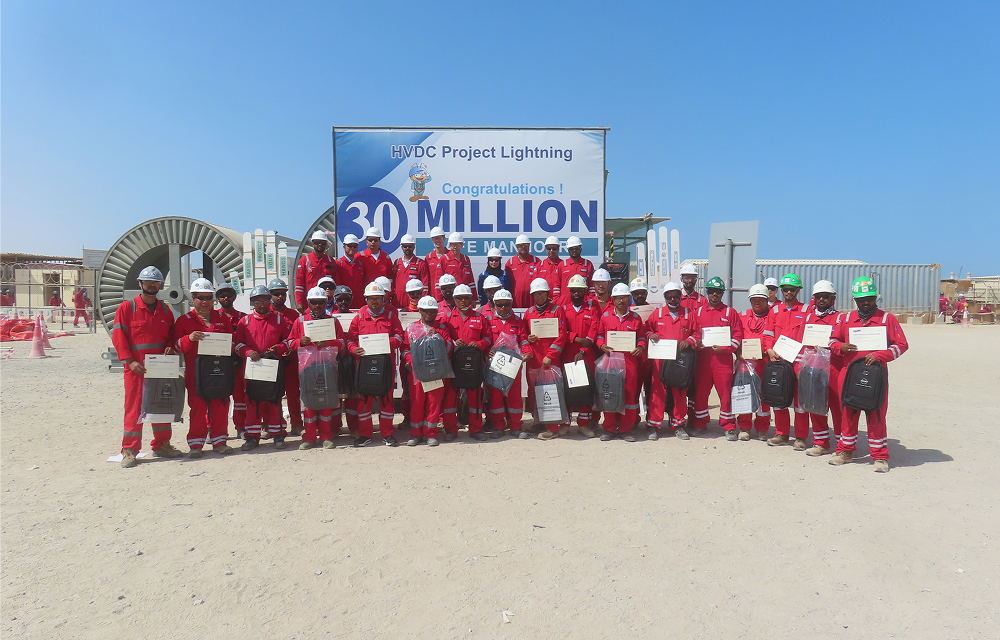
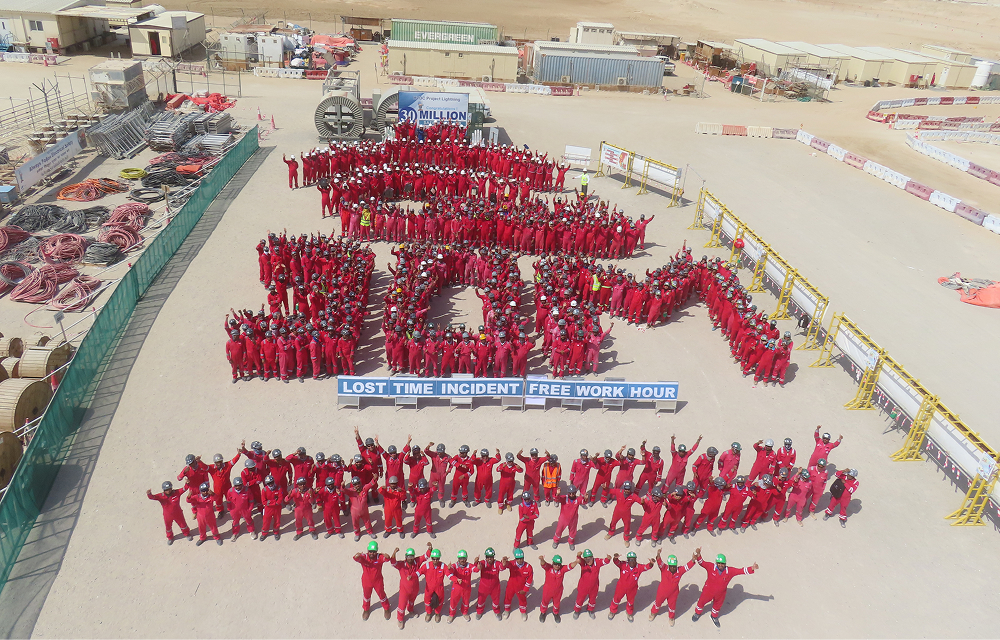
Samsung C&T Engineering & Construction (E&C) Group’s UAE high-voltage direct current (HVDC) project has reached 30 million work hours without a single lost-time injury (LTI) or more serious incident.
The milestone follows more than four years of construction under demanding onshore, offshore and subsea conditions. The project has maintained its safety performance despite extreme heat and sandstorms on land, as well as rough seas and the complex risks associated with work around offshore facilities.
Approximately 3,000 people work across the project each day. Maintaining a consistent safety standard across every work scope and location has required a closely coordinated prevention system supported by safety-focused design, collective risk assessment, direct field communication and the authority to stop unsafe work.
Managing Safety Across Four Separate Sites
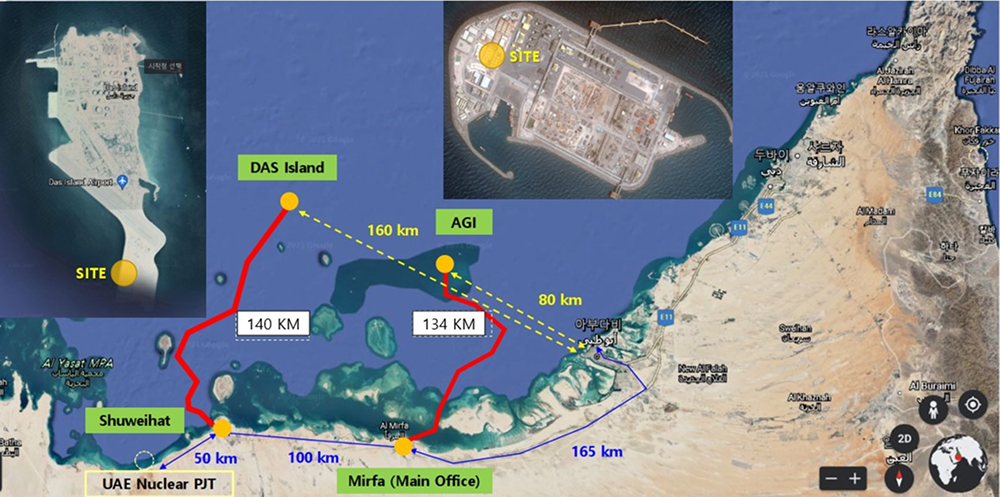
The UAE HVDC project involves the construction of four power converter stations for alternating current and direct current conversion, together with two major subsea transmission links.
One transmission system has a capacity of approximately 600 MW and extends for 140 kilometers, while the other has a capacity of 1,000 MW and spans 134 kilometers.
The project is divided across four separate locations: two onshore sites near Abu Dhabi and two offshore islands accommodating oilfield facilities. Some parts of the same project are therefore separated by approximately 140 kilometers. This geographically distributed, multi-island configuration creates safety-management challenges beyond those of a conventional construction project concentrated at a single site. Work plans, risk controls and communication procedures must be coordinated across locations with different environments, operating conditions and access requirements.
What 30 Million Safe Work Hours Represents
Viewed as a number alone, 30 million work hours can be difficult to put into perspective.
At the UAE HVDC project, the milestone represents approximately 3,000 people working each day for more than four years without an accident classified as an LTI or above.
The achievement also reflects the consistency required to uphold the same safety principles across onshore converter stations, offshore islands and subsea construction areas. Since the project’s pandemic-era groundbreaking, safety measures have been continuously applied across different work scopes, participating organizations and stages of construction.
More than a numerical record, the milestone demonstrates the effectiveness of Samsung C&T’s prevention-focused safety-management system in a complex international project environment.
Building Safety into Every Stage of the Project
The 30 million-hour record was supported by a site culture in which safety is treated as a shared responsibility and potential risks are addressed before work begins.
Eliminating Risk Through Design for Safety
The project actively applied Design for Safety (DFS) from the design stage.
Project drawings and work methods were reviewed to identify how potential hazards could be removed or reduced before reaching the construction site. This allowed safety considerations to be incorporated directly into the project design rather than relying solely on controls introduced after work had begun.
By examining risks at an early stage, the project established a more systematic foundation for preventing incidents throughout construction.
Expanding Risk Assessment Across the Project
Safety participation was not limited to project managers or designated safety personnel.
Through FRA-based risk assessments, the client, Samsung C&T, partner companies and workers participated in identifying potential hazards and reflecting the findings in work plans.
Input from workers familiar with individual tasks and site conditions was incorporated into safety procedures, allowing practical field experience to inform how work was prepared and carried out.
This project-wide approach helped ensure that risk assessment remained connected to actual site conditions across all four locations.
Turning Field Feedback into Safety Improvements
The project also introduced one-on-one hazard communication mentoring to strengthen bottom-up communication.
Rather than relying only on one-directional instructions, managers met workers directly in the field to discuss the risks associated with their work and listen to their concerns.
Worker feedback was then reviewed and reflected in site improvements. This created a communication structure in which issues identified during daily operations could lead to practical changes in work methods and safety controls.
Establishing Stop-Work Authority
A voluntary stop-work culture has also become firmly established across the project.
Workers are empowered to immediately suspend an activity when they identify an unsafe condition. This allows potential hazards to be addressed before work resumes and reinforces the principle that schedule or operational pressures must not take priority over safety.
By encouraging each worker to take ownership of site safety, the project has maintained its core safety requirements without compromise.
Establishing a Safety Benchmark Beyond the UAE
The 30 million-hour milestone has demonstrated Samsung C&T’s safety-management capabilities to the project client, Abu Dhabi Offshore Power Transmission Company.
The project has maintained its safety record while meeting international health, safety and environment (HSE) requirements across a complex combination of geographically separated onshore, offshore and island-based sites.
The achievement therefore represents more than success at a single construction site. It provides a strong safety-management reference for Samsung C&T’s future participation in infrastructure projects across the Middle East and other global markets.
By integrating safety into design, work planning, field communication and daily decision-making, the UAE HVDC project has established a coordinated prevention system that can be applied throughout the remaining construction process.
Continuing the Record Through Completion
The 30 million-hour milestone marks the progress made to date, while the project’s focus remains firmly on the work ahead.
Samsung C&T will continue reinforcing preventive safety measures across all sites, with particular emphasis on data-based risk management, field inspections and timely communication. These efforts will remain essential as construction advances and site conditions continue to evolve.
Through consistent application of these measures, the UAE HVDC project aims to carry its safety record through to successful completion.