
 KO
KO


- Incoterms provide a standardized framework that defines responsibilities, costs, and risks between buyers and sellers in international trade
- For global trading organizations such as Samsung C&T Trading & Investment Group, Incoterms support clearer coordination and more efficient cross-border transactions
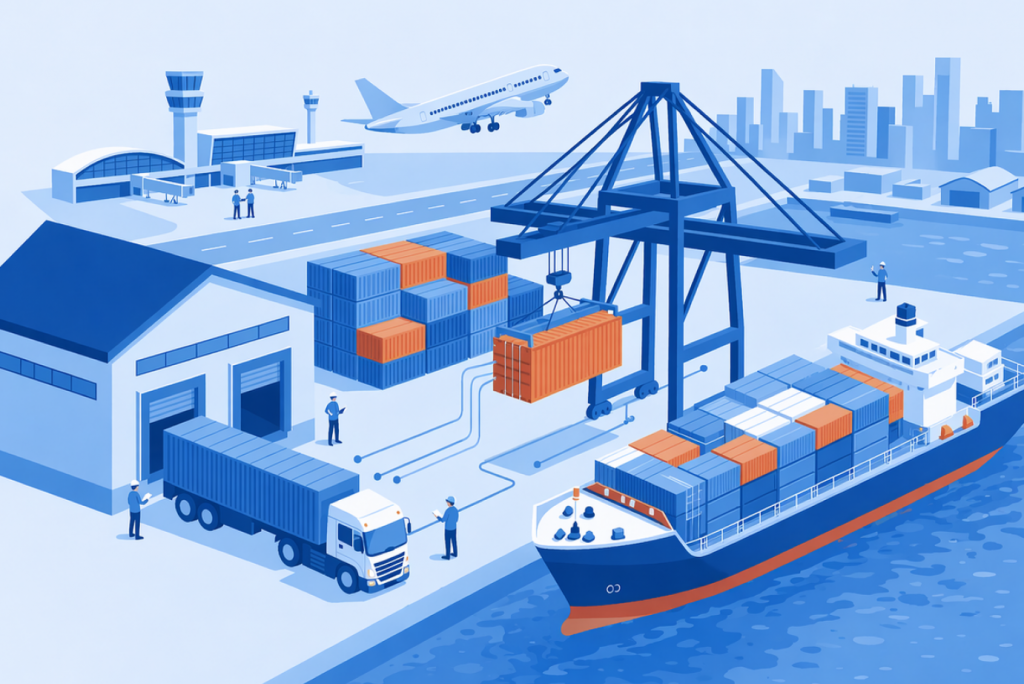
International trade today involves complex supply chains spanning multiple countries, transportation modes, and regulatory environments. Cross-border transactions often require coordination between suppliers, logistics providers, customs authorities, and buyers, making it increasingly important to clearly define responsibilities at every stage of delivery.
To support this complexity, Incoterms, or International Commercial Terms, provide a standardized framework for global trade. Published by the International Chamber of Commerce (ICC), Incoterms establish internationally recognized rules that define the responsibilities of buyers and sellers in international transactions. By creating a common language for trade, Incoterms help reduce misunderstandings, minimize disputes, and improve operational clarity.
What are Incoterms?
Incoterms are a set of 11 standardized rules used in international trade to define the responsibilities of buyers and sellers during the shipment of goods. These rules clarify key aspects of delivery, including transportation, insurance, customs clearance, documentation, and risk allocation.
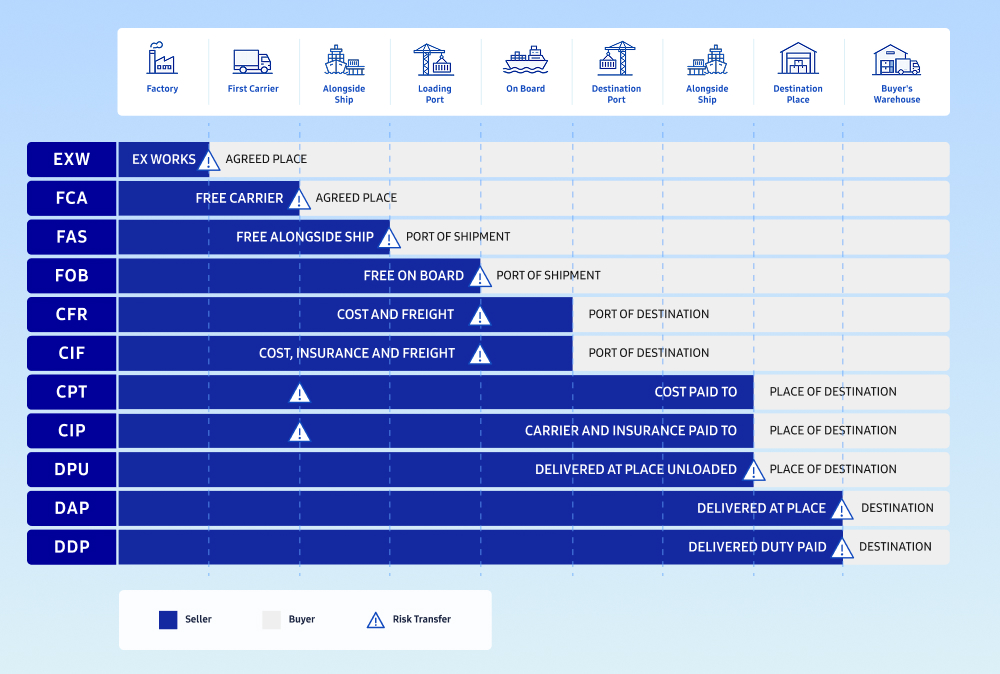
Each Incoterm specifies when delivery occurs and when risk transfers from the seller to the buyer. This transfer point is one of the most critical aspects of international trade, as it determines who is responsible for potential losses, damages, or delays during shipment.
While Incoterms define logistics-related responsibilities, they do not cover all aspects of a transaction. For example, they do not determine payment terms, transfer of ownership, product quality, or dispute resolution. These elements must be addressed separately in commercial agreements.
Incoterms specify who is responsible for:
- Arranging transportation
- Paying freight costs
- Obtaining export and import licenses
- Handling customs clearance
- Arranging cargo insurance
- Packing goods and preparing documentation
This clear allocation of responsibilities helps reduce misunderstandings and improve transaction efficiency.
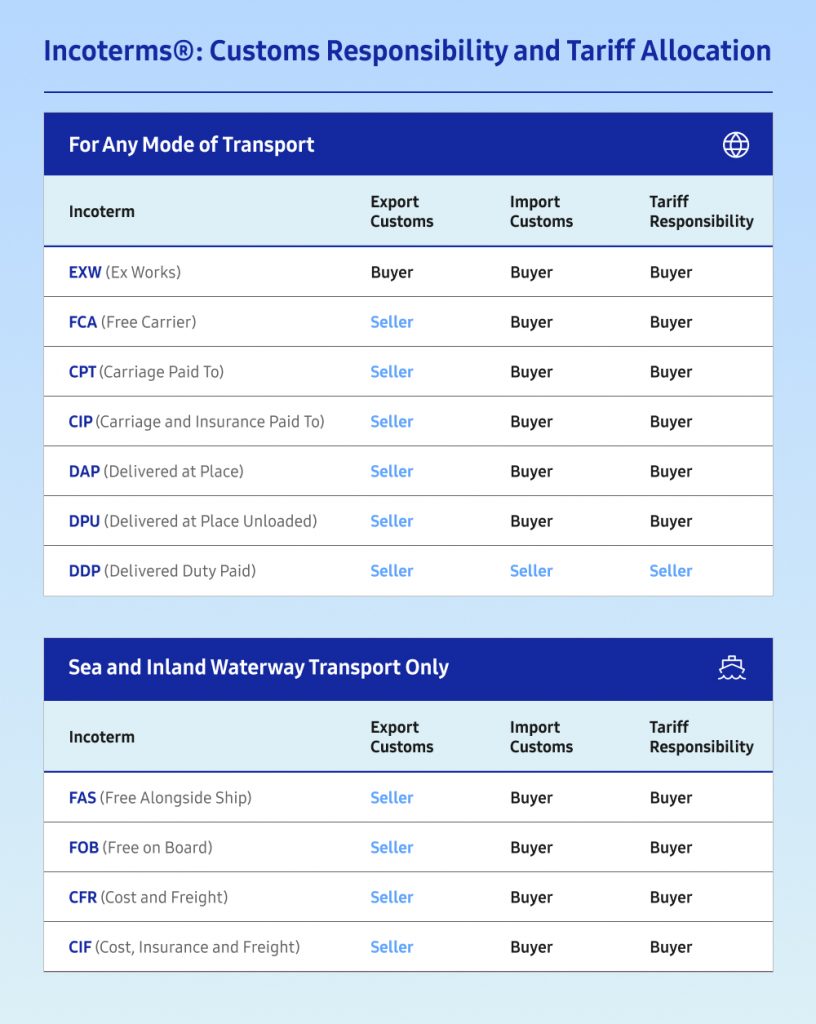
As shown below, responsibility for customs clearance and tariffs varies across Incoterms. In most cases, import duties are paid by the buyer, while Delivered Duty Paid (DDP) is the only Incoterm where the seller assumes this responsibility.
How Incoterms Define Responsibility and Risk
Responsibility under Incoterms shifts across key stages of the shipping process, from origin to final delivery. These stages typically include:
- Origin handling and export preparation
- International transportation
- Customs clearance
- Destination delivery
Different Incoterms assign responsibility at different points along this journey. EXW places most responsibilities on the buyer, while DDP assigns the majority of obligations to the seller. Other commonly used terms, including FOB, CIF, and CFR, distribute responsibilities across different stages of sea transportation.
These variations influence risk exposure, logistics planning, and cost allocation. Selecting the appropriate Incoterm therefore plays an important role in structuring international trade transactions and managing operational risk.
Incoterms and Negotiation in Global Trade Transactions
Incoterms often play a central role in contract negotiations between buyers and sellers. By determining how responsibilities and risks are allocated, Incoterms influence both operational planning and commercial terms.
Both parties may seek to manage risk exposure by adjusting responsibility allocation. Factors influencing Incoterms decisions may include transportation distance and complexity, the value of goods, insurance requirements, and customs and regulatory considerations.
Industry preferences may also influence Incoterms selection. Different sectors often favor specific terms depending on operational structures, logistics capabilities, and risk tolerance.
Through negotiation, companies can balance responsibilities, align operational capabilities, and reduce potential risks. Selecting appropriate Incoterms therefore becomes an important part of structuring global trade transactions.
Supporting Clarity in Global Trade
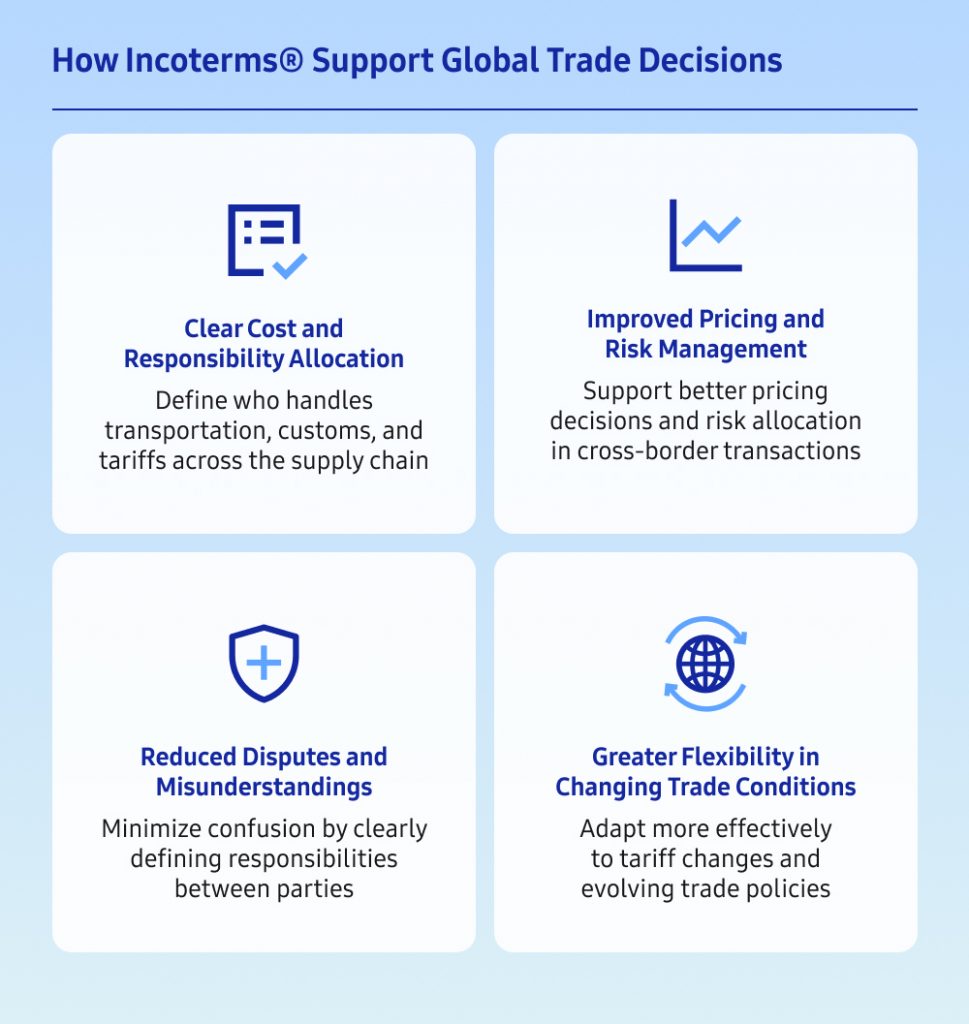
Incoterms remain a fundamental reference point for structuring international trade transactions. By clearly defining responsibilities and risk allocation, they support more consistent coordination across global supply chains and commercial agreements.
The most recent Incoterms® 2020 rules, published by the ICC, reflect evolving trade practices and regulatory considerations. As global trade environments continue to shift, staying informed on updated Incoterms guidance remains important for companies engaged in cross-border operations.