
 KO
KO


- Country of origin is a core element of global trade, affecting tariff treatment, customs clearance, and regulatory compliance as supply chains become more complex
- As production spans multiple countries and stages, origin determination increasingly relies on detailed trade rules and documentation, with customs authorities applying greater scrutiny across international trade flows
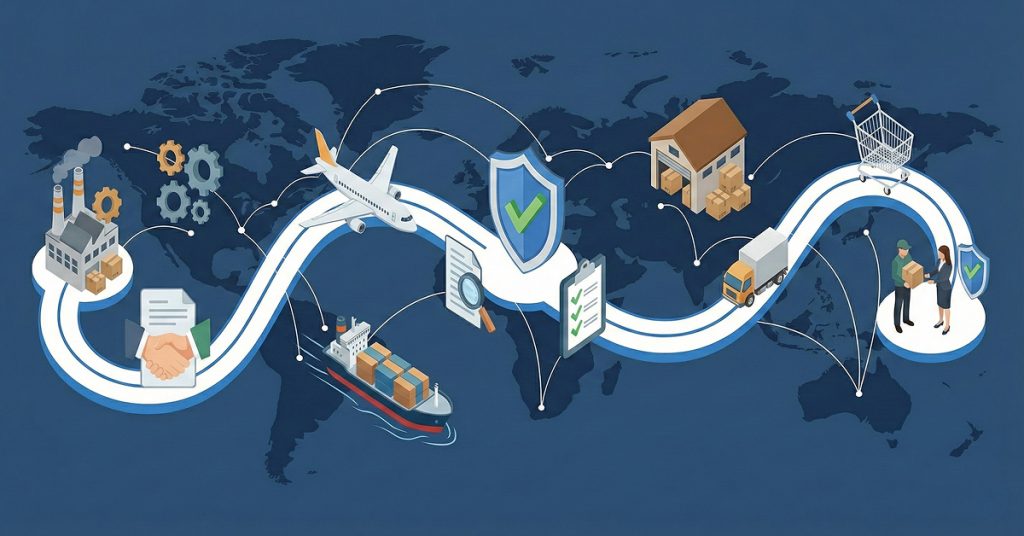
Country of origin is one of the most fundamental concepts in international trade, yet it is often misunderstood outside regulatory and customs environments. While consumers encounter “Made in” labels every day, origin carries far greater operational and legal significance for companies moving goods across borders.
Today’s supply chains involve multiple sourcing locations, processing stages, and cross-border transactions. At the same time, geopolitical uncertainty, expanding Free Trade Agreement (FTA) networks, and stricter customs oversight have increased the importance of precise origin determination. Errors in origin classification can lead to shipment delays, duty reassessments, or formal verification procedures, creating disruption across global trade flows.
As trade structures continue to evolve, origin management has shifted from an administrative requirement to a core element of supply chain reliability and compliance.
What Country of Origin Means in Practice
In international trade, country of origin is not defined simply by where a product is assembled or shipped from. Instead, origin is determined through specific rules set out in trade agreements and customs regulations, which vary depending on the applicable Free Trade Agreement (FTA) or importing country.
These rules typically assess whether a product has undergone substantial transformation, meets value-added thresholds, or satisfies defined processing requirements. For goods produced through multi-country supply chains, determining origin often requires detailed analysis of materials, production processes, and cost structures.
Accurate origin classification directly affects eligibility for preferential tariff treatment, product pricing, and the speed of customs clearance. When origin information is incomplete or inconsistent, customs authorities may request additional documentation or initiate verification procedures that can delay shipments and increase compliance costs.
In recent years, origin verification has become more structured and frequent. Depending on the FTA, verification may involve written questionnaires, information requests, or, in certain cases, on-site verification visits. These processes can target exporters, producers, or issuing authorities, and may be conducted directly by importing customs authorities or indirectly through the exporting country’s authorities. In some regions, including the European Union, customs authorities hold broad rights to request extensive records even when no specific violation is suspected. Under these frameworks, responsibility for origin accuracy rests with the party issuing the origin declaration.
Managing Origin Across Global Supply Chains
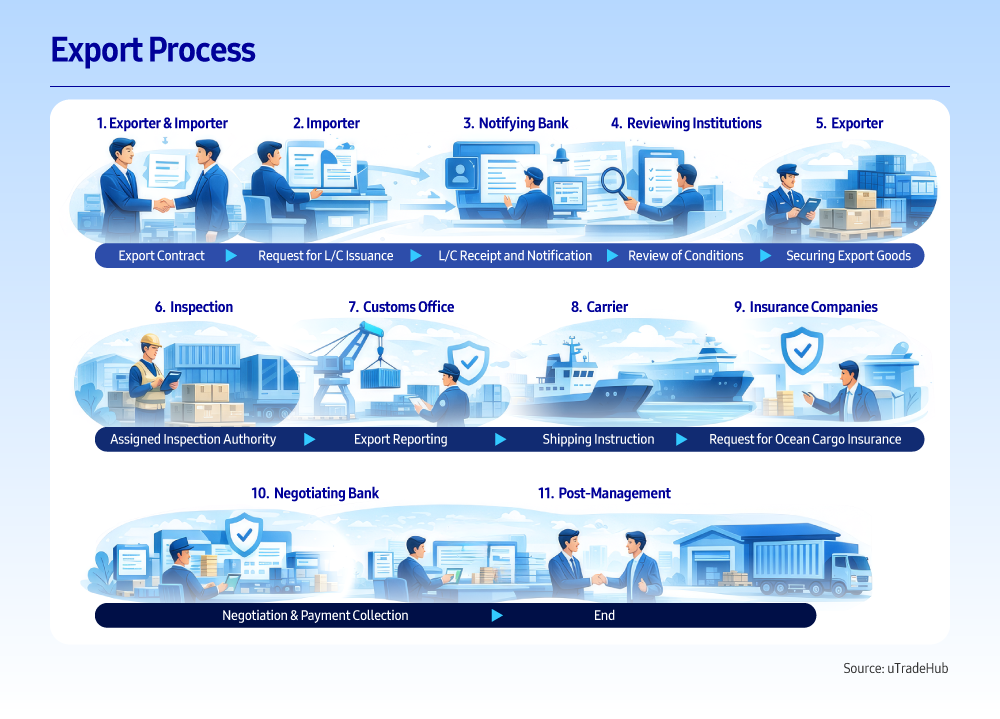
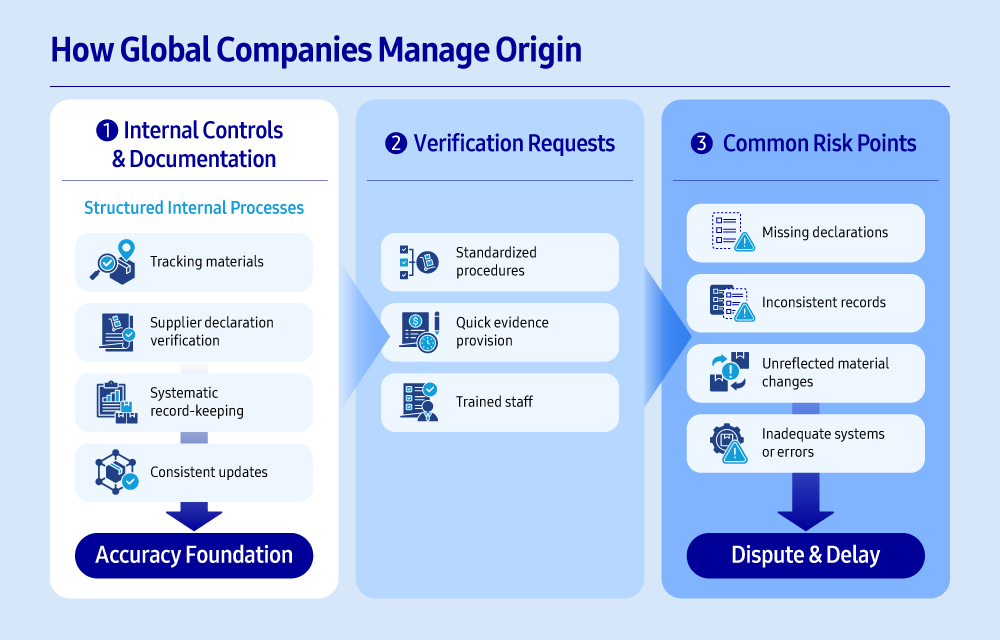
To address these requirements and respond effectively to verification procedures, companies operating in international trade rely on structured origin management systems designed to ensure accuracy and consistency.
Effective origin management begins with internal controls and documentation. This includes tracking materials and components throughout the supply chain, collecting supplier origin declarations, and maintaining records that reflect current production and sourcing conditions. When suppliers or production processes change, origin determinations must be reviewed to ensure continued compliance.
Equally important is the ability to respond efficiently to origin verification requests. Many FTAs apply defined response procedures, requiring companies to provide supporting documentation within set timeframes. As a result, companies often designate trained personnel responsible for origin management and establish standardized procedures for responding to official inquiries. Supporting evidence may include bills of materials, invoices, and records of production or processing activities.
Common risk points include outdated supplier declarations, inconsistent production records, and manual data handling errors. Without robust internal systems, these gaps can expose companies to penalties, shipment delays, or the loss of preferential tariff benefits. Strengthening origin management processes helps reduce these risks and supports smoother customs interactions.
Why Origin Management Matters Beyond Compliance
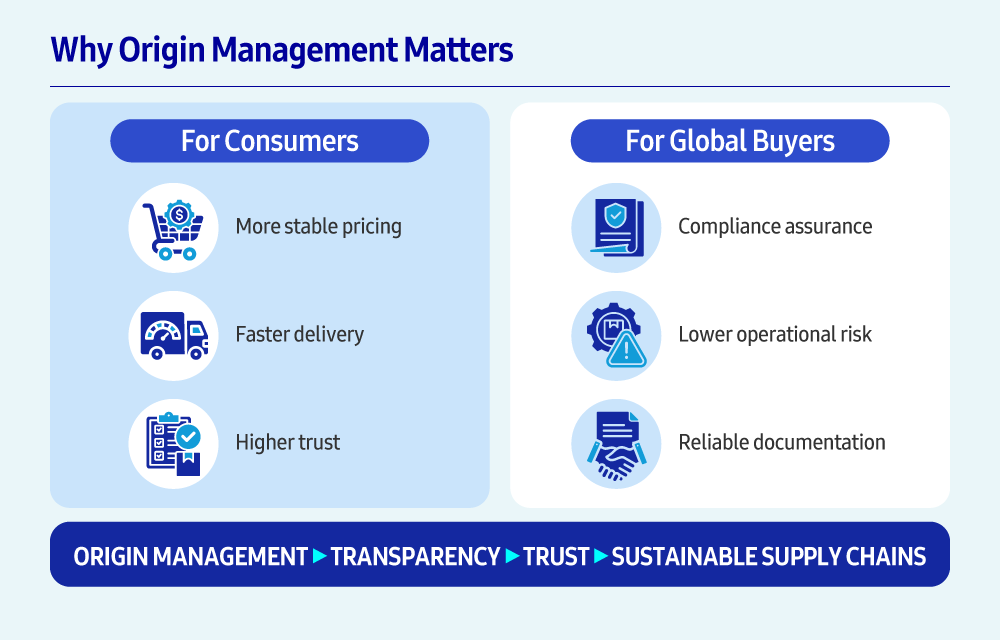
Accurate origin management benefits the broader trade ecosystem by supporting stability and transparency across supply chains.
For importers and buyers, reliable origin documentation reduces uncertainty during customs clearance and lowers the risk of unexpected duties or regulatory issues. For exporters, it supports predictable trade execution and minimizes disruption caused by verification procedures.
From a market perspective, correct origin classification contributes to more stable pricing by ensuring appropriate tariff treatment. It also supports faster product availability by reducing clearance delays at borders. As regulatory expectations continue to rise, origin management is increasingly viewed as part of responsible supply chain governance rather than a purely technical requirement.
Samsung C&T as an Approved Exporter
Country of origin remains a cornerstone of international trade. Samsung C&T Trading & Investment (T&I) Group applies established origin management processes across its trading operations and holds Company-Specific Approved Exporter certification issued by Korean Customs. This certification recognizes the Group’s ability to manage origin determination and FTA documentation under defined internal controls.
For global trading companies handling a wide range of commodities, materials, and industrial products, systematic origin management supports efficient customs procedures and reliable trade execution across international markets. By maintaining structured processes and readiness to respond to verification requirements, Samsung C&T T&I supports trusted partnerships and stable cross-border operations in an increasingly complex global trade environment.