
 KO
KO


- Incoterms were introduced to create consistent global definitions for trade terms and reduce misunderstandings in cross-border transactions
- The rules have been revised over time to reflect changes in transportation systems, logistics practices, and global supply chains
- Their continued evolution highlights the growing importance of clear responsibility allocation in today’s complex trade environment
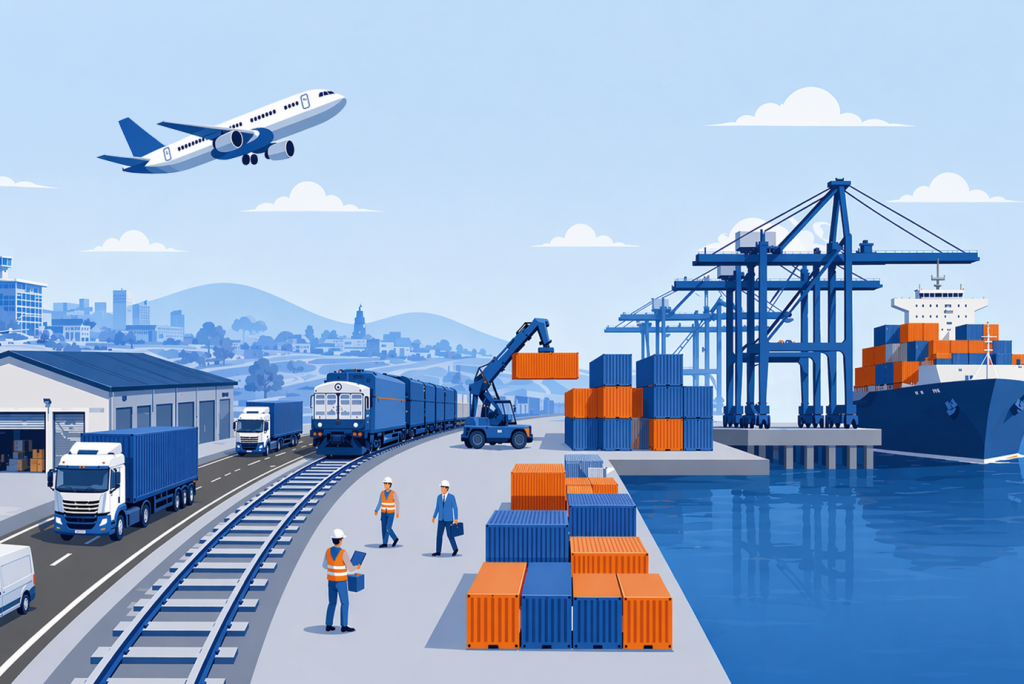
Global trade today operates through highly interconnected networks involving ports, inland transport, customs procedures, warehouses, and multiple stakeholders across different markets. As supply chains have expanded, the movement of goods has become more complex, requiring greater coordination at every stage of the transaction.
In this environment, clearly defining responsibilities between buyers and sellers is essential to avoid delays, disputes, and unexpected costs. Incoterms provide a standardized framework that supports this process. Since their introduction, the rules have continued to evolve in response to changing trade conditions. This article explores how Incoterms developed over time and what their evolution reveals about the modern trade landscape.
The Origins of Incoterms: Bringing Order to Early Global Trade
Before Incoterms were formally introduced, commonly used trade terms such as FOB and CIF were already in circulation. However, their meanings were not always interpreted consistently across countries and markets. Differences in interpretation often created uncertainty regarding delivery responsibility, cost allocation, and the point at which risk transferred from seller to buyer.
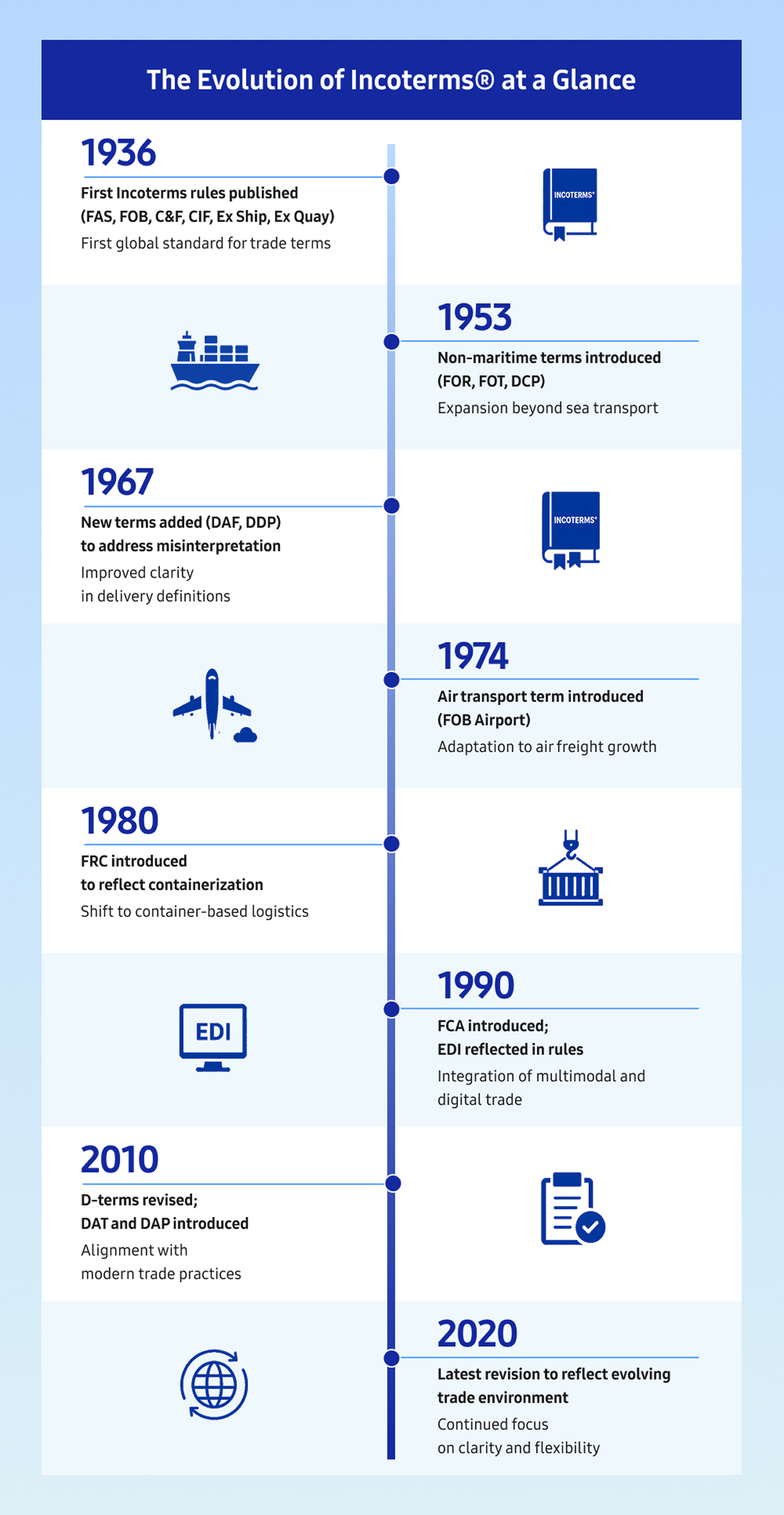
In the 1920s, the International Chamber of Commerce (ICC) conducted studies across multiple countries and found significant disparities in how commercial trade terms were understood. To address this issue, the first official version of Incoterms was published in 1936.
The introduction of Incoterms marked an important step toward greater clarity and consistency in international trade. By establishing a common set of globally recognized rules, the framework helped reduce misunderstandings in cross-border transactions.
Why Incoterms Evolved: Trade Systems in Transition
As international trade expanded, the original Incoterms framework required updates to remain relevant. New transport systems, larger trade volumes, and more complex logistics structures changed how goods moved across borders.
Several developments shaped later revisions:
| Trade Development | Impact on Incoterms |
| Expansion of global trade volumes | Increased number of transactions and stakeholders |
| Rise of rail and inland transport | Need for non-maritime trade terms |
| Growth of air freight | New delivery definitions beyond seaports |
| Containerization | Shift from ship-side delivery to inland logistics points |
| Multimodal transport | Integration of ship, rail, and truck systems |
These changes introduced multiple handover points, broader networks, and more parties involved in each shipment. As a result, responsibilities and risk transfer points needed to be defined more precisely.
Incoterms evolved because global trade moved from relatively simple maritime transactions to increasingly integrated and multimodal supply chains.
How Incoterms Adapted to Modern Trade Operations
Incoterms are revised periodically to reflect real-world trade practices. Recent updates have focused on improving clarity and aligning the rules with current logistics systems.
Some of the most notable changes include:
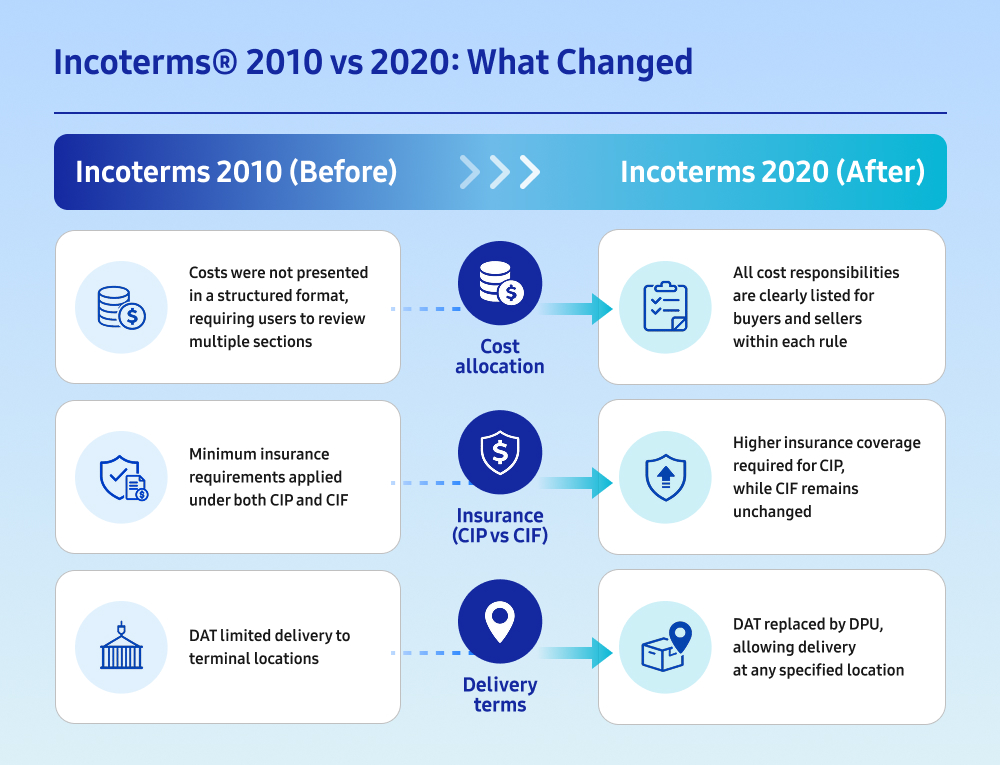
In addition to these changes, revisions over time have simplified the number of terms, improved usability, and clarified responsibilities between parties.
Rather than theoretical revisions, these updates reflect practical developments in how trade transactions are structured and executed.
What Incoterms Reveal About Today’s Trade Environment
The evolution of Incoterms reflects broader structural changes in global trade. As supply chains have expanded across multiple countries and transport systems, the movement of goods has become more complex and interconnected.
Several trends help explain why Incoterms remain important today:
- Increasing complexity of global supply chains
- Greater need for clear risk allocation and cost transparency
- More coordination required across logistics networks
- Higher sensitivity to regulatory changes and operational disruptions
In this environment, unclear allocation of responsibility can lead to delays, disputes, and unexpected costs. Clearly defined contractual frameworks have therefore become increasingly important for managing international transactions.
Incoterms help companies define responsibilities between parties, manage risk exposure, and support smoother execution of cross-border trade. Their continued evolution demonstrates that they are not static rules, but tools that adapt to changing trade conditions.
As global trade environments become more complex and risk-sensitive, clear responsibility allocation remains essential for efficient operations.
Adapting with Global Trade
Incoterms were introduced to resolve inconsistencies in international trade and have continued to evolve alongside changes in transportation systems, logistics practices, and global supply chains.
Each revision reflects practical developments in how goods are moved, managed, and delivered across borders. As global trade continues to develop, the role of standardized frameworks such as Incoterms remains critical in supporting clear, efficient, and reliable international transactions.