
 KO
KO


- Global supply chains are vulnerable to external shocks, increasing the importance of contractual mechanisms that help businesses respond to uncertainty in international trade
- While Incoterms define responsibility in global trade, they do not provide legal protection in force majeure situations, highlighting the need for additional contractual protection when unexpected disruptions occur
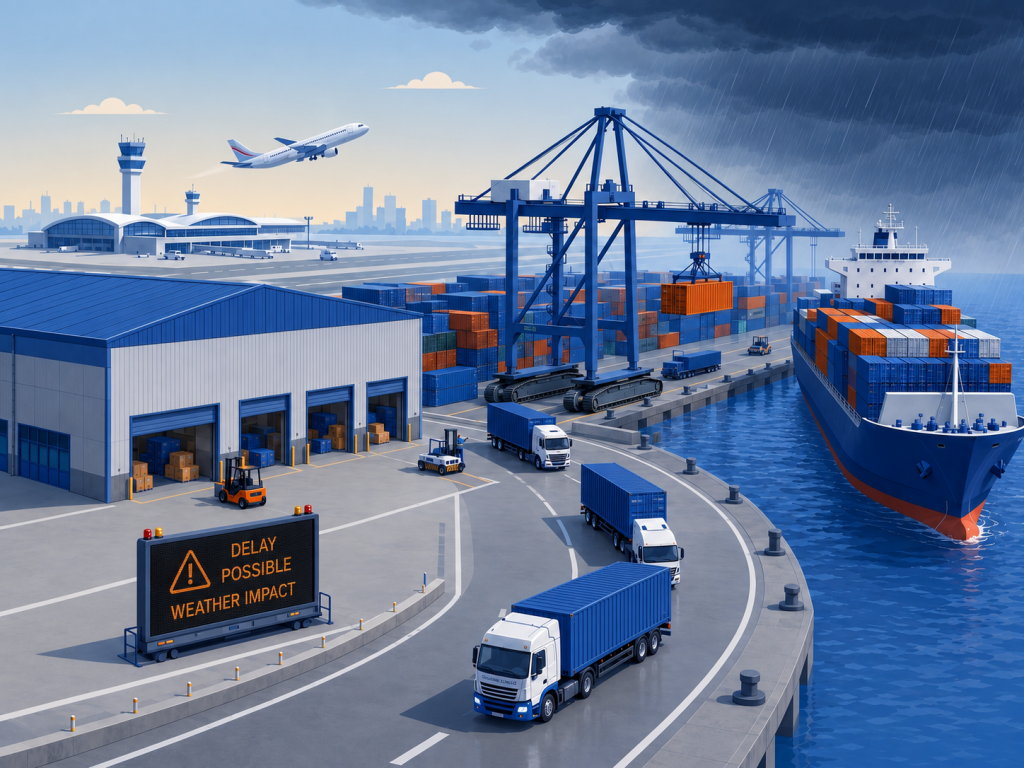
International trade today operates through highly interconnected networks involving ports, transportation providers, customs procedures, manufacturers, and buyers across multiple regions. While these systems support increasingly efficient global commerce, they can also create greater exposure to disruption when unexpected events occur.
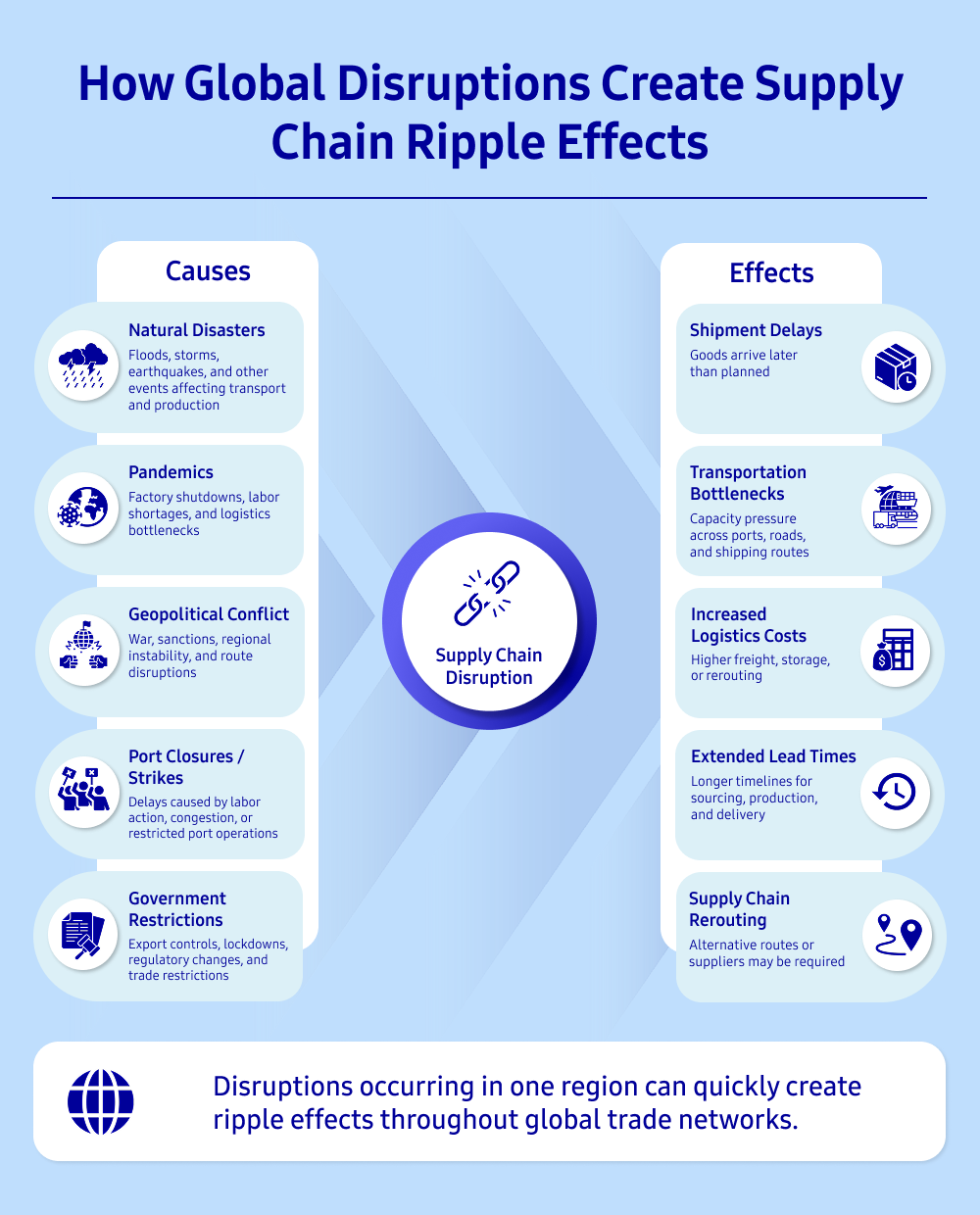
Recent trade environments have become increasingly exposed to recurring disruption from external factors. Pandemic-related shutdowns, transportation bottlenecks, geopolitical tensions, and changing regulations have created operational challenges across industries. Events occurring in one location can quickly create ripple effects throughout global logistics networks.
Unexpected supply chain disruption can also create a new risk for businesses: the inability to fulfill contractual obligations. As international trade environments become increasingly interconnected and disruption-prone, how legal responsibility is allocated in situations beyond the control of the parties involved has become an increasingly important consideration.
Understanding Force Majeure in International Trade
In international trade, force majeure generally refers to extraordinary events beyond the control of the parties involved. These events may include natural disasters, pandemics, geopolitical conflict, labor strikes, government restrictions, or transportation disruptions.
Today, businesses must prepare proactively for extreme disruptions that extend beyond routine operations. Recent supply chain disruptions have highlighted how broad these events can become. During global pandemics, factory shutdowns, labor shortages, and logistics bottlenecks affected operations worldwide. Shipping route disruptions and port congestion have similarly demonstrated how challenges in one region can influence trade activity elsewhere.
As supply chains become increasingly interconnected, businesses need contractual mechanisms for responding to disaster-related disruptions that extend beyond routine operational planning.
When Standard Trade Frameworks Reach Their Limits
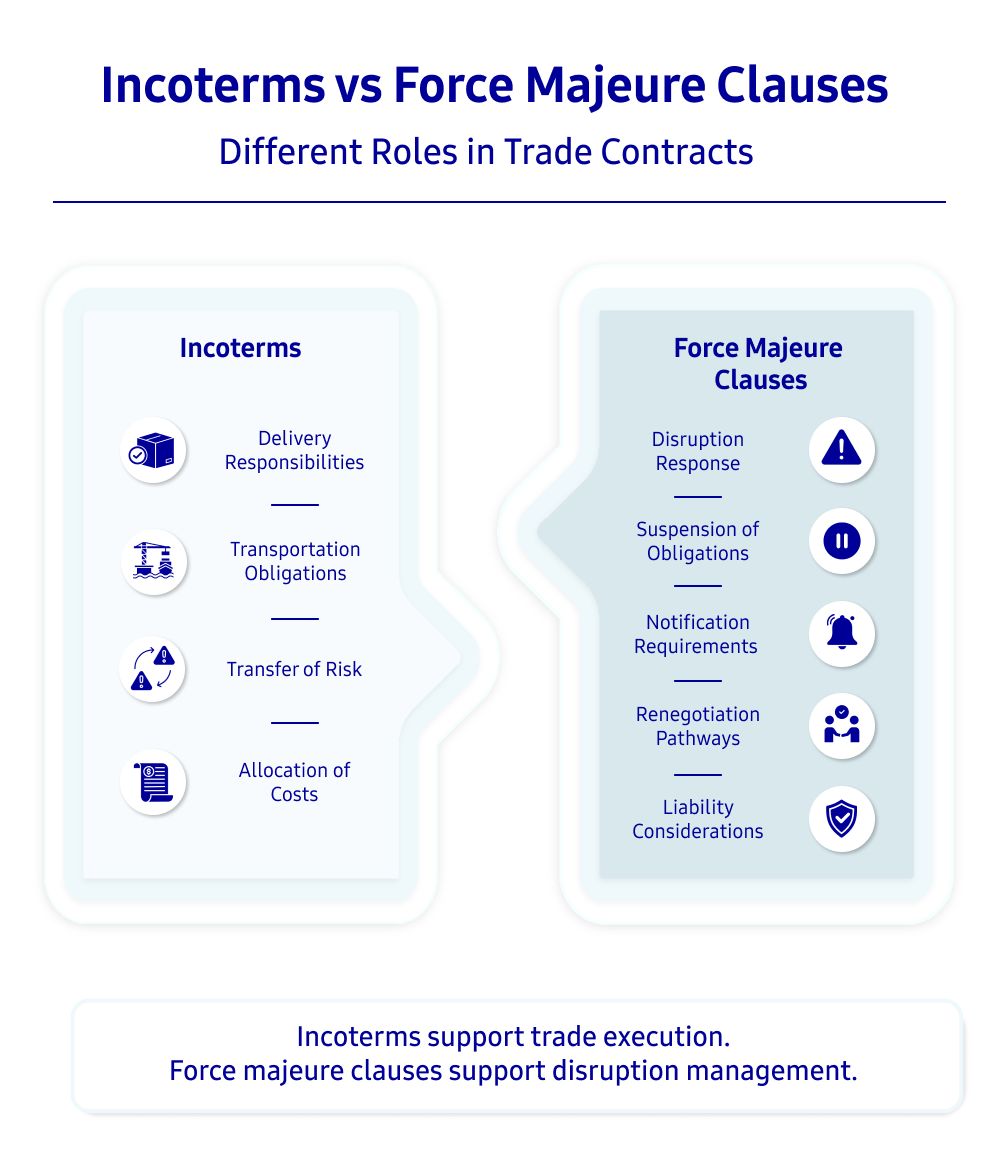
As explored in the previous articles in this series, Incoterms mainly allocate logistics-related responsibilities under normal trade conditions. They help define key responsibilities in international trade, including delivery obligations, transportation arrangements, cost allocation, and the point at which risk transfers between buyer and seller. These rules provide a shared operational framework for structuring cross-border transactions.
However, Incoterms are not a tool for exempting contractual performance when force majeure events occur. They do not define which disruptions qualify as force majeure, whether delayed performance creates liability, or how long obligations may be suspended during a major interruption.
This distinction is important because disruption does not automatically remove contractual responsibility. Even when goods are delayed by a major external event, the outcome depends on the wording of the contract, the type of disruption involved, and the legal framework governing the agreement. Incoterms can clarify who is responsible for specific stages of shipment, but additional contractual clauses are needed to address whether obligations may be suspended, extended, renegotiated, or released under exceptional circumstances.
Why Contracts Require Additional Protection
Additional contractual clauses are needed to address legal responsibility in exceptional disaster-related situations. Force majeure clauses provide this additional layer of contractual protection by defining how extraordinary and uncontrollable events should be handled. At their core, these clauses help determine whether a party may be relieved from liability when it cannot fulfill contractual obligations due to circumstances beyond its control.
However, force majeure is not automatically applied simply because a disruption occurs. In many cases, the event must
- fall outside the control of the parties,
- be difficult to reasonably foresee, and
- be serious enough to prevent performance under the contract.
General inconvenience, higher costs, or operational difficulty may not be sufficient unless the contract specifically provides for those situations.
This is why the wording of the clause is especially important in preventing misunderstanding. Contracts that clearly identify covered events, such as natural disasters, pandemics, war, labor strikes, port closures, transportation restrictions, or government measures, may provide clearer guidance than broad language referring only to “events beyond control.” Interpretation can also vary by jurisdiction, making specificity even more important in cross-border transactions.
Recent disruptions have also shown that even large-scale events may not always lead to liability exemption. For example, the global pandemic created widespread operational challenges, but whether force majeure protection applied depended on how each contract defined covered events, government restrictions, closure, delay, or non-performance. As certain risks become more frequent, such as severe weather, recurring port disruptions, or regional instability, businesses may need more precise wording to clarify when those risks are considered unforeseeable.
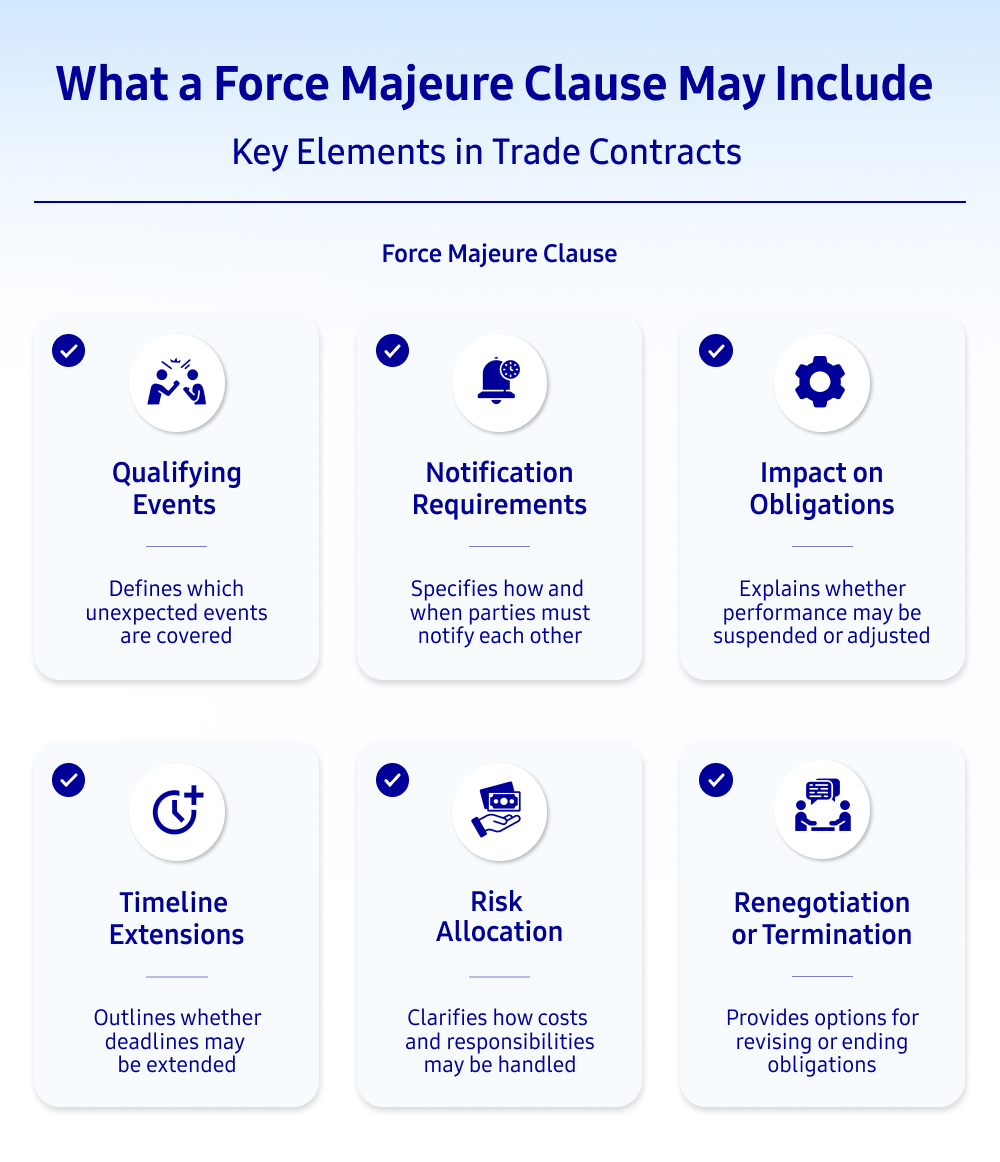
A well-structured force majeure clause can also define the practical steps parties must follow during disruption. These may include notification requirements, supporting documentation, timeline extensions, temporary suspension of obligations, renegotiation procedures, or conditions for termination if the disruption continues for an extended period.
Planning for a More Uncertain Trade Environment
Carefully structured contracts are becoming a central part of modern supply chain risk management. As global trade becomes more exposed to operational, regulatory, geopolitical, and environmental disruptions, contract planning is becoming increasingly important. Clear responsibility allocation remains essential, but companies also need mechanisms that address situations where obligations cannot be fulfilled as originally planned.
Incoterms and force majeure clauses work together as complementary frameworks. Incoterms continue to support day-to-day trade execution by defining responsibilities between buyers and sellers. Force majeure clauses add another layer by helping parties clarify what qualifies as an extraordinary event, how disruption should be communicated, and what happens to obligations when performance becomes delayed, suspended, or impossible.
Only when the two frameworks are combined can businesses fully defend themselves amid unexpected disruptions.